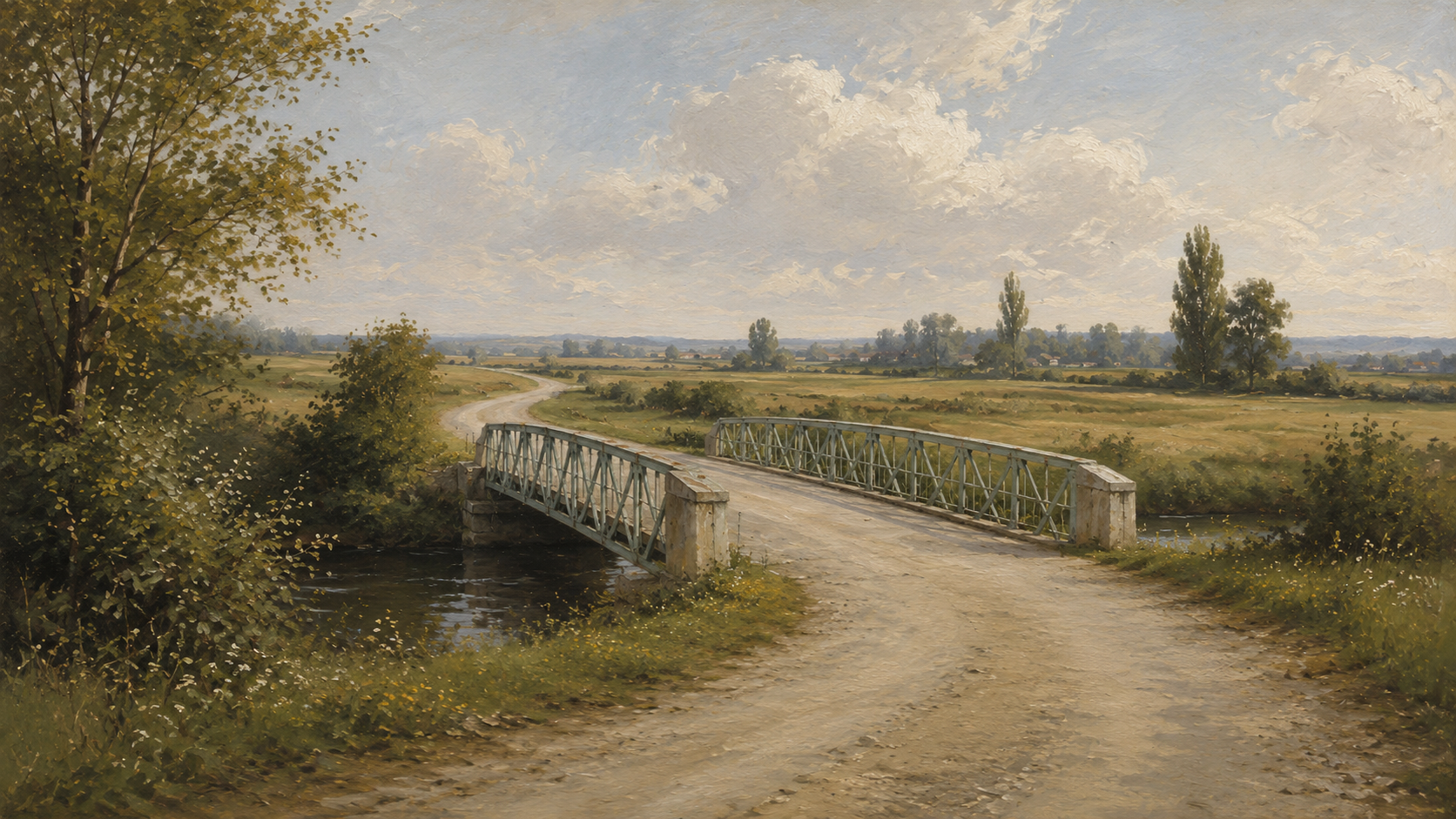
The Future Cannot Maintain the Bridge
One of the defining marks of a serious public administrator or legislator is the ability to set aside real disagreement and still make a clean deal.
Not fake disagreement.
Not minor disagreement.
Real disagreement. Sometimes deep disagreement. Sometimes near-total opposition on the major questions of public life.
The best civic leaders know how to keep those disagreements from contaminating every negotiation with a hidden condition, a poison pill, or a gotcha baked into the fine print.
They know how to move toward mutual benefit and practical collaboration for the good of the people they serve.
In my career so far, I have had the pleasure of working with appointed and elected officials who choose that path every day. It is not as rare as people think. We just don’t hear about it often, because it rarely makes the news.
There is a difference between being a public administrator or legislator and being only a champion of a cause who happens to hold public office.
That is not a criticism of causes, advocates, or the work of persuading people toward ideas. We are better off because of the public square. We are better off when serious people encounter views different from their own.
But many of the problems that remain unsolved year after year, decade after decade, are not abstract debates.
The bridge that should have been sandblasted and painted every ten years but has not been touched in almost a century.
The pension payment deferred for the sixth year in a row.
The abandoned development site that has sat vacant for twenty-five years.
The park that slowly declines because nobody wants to own the hard decision.
The road, the tax base, the downtown, the economic engine of a community.
Too often, these decisions get trapped inside every other political argument of the moment. Symbolic fights. Cultural fights. Procedural fights. Personality fights. The argument of the moment gets attached to the obligation that has been sitting there for years.
Those debates do matter. They tell us where we have been, where we are going, and what kind of future people hope to build.
But the best civic leaders know how to separate those debates from the decisions that must be made now.
Because some decisions cannot be recovered later.
The future can revisit many of our ideas. It can revise them, reject them, improve them, or prove them wrong.
But the future cannot go back and maintain the bridge.
It cannot go back and make the pension payment.
It cannot go back and preserve the park, the road, the tax base, the downtown, or the economic engine after years of neglect.
That is the obligation.
Maintain the bridge.
Fund the pension.
Preserve the park.
Protect the economic engine.
Make the hard deal when the deal has to be made. Cleanly.
Because when it comes to the arguments that feel decisive in the moment, we are going to get some things wrong. Every generation does.
Some of our certainties will age badly. Some of our assumptions will be revised. Some of the things that feel obvious today will look different to the people who come after us.
But while we argue over the questions of the present, we cannot keep kicking the can on the decisions the future will not be able to make for us.
The future may be able to correct our ideas.
It cannot go back in time and rebuild what we allowed to fall apart.