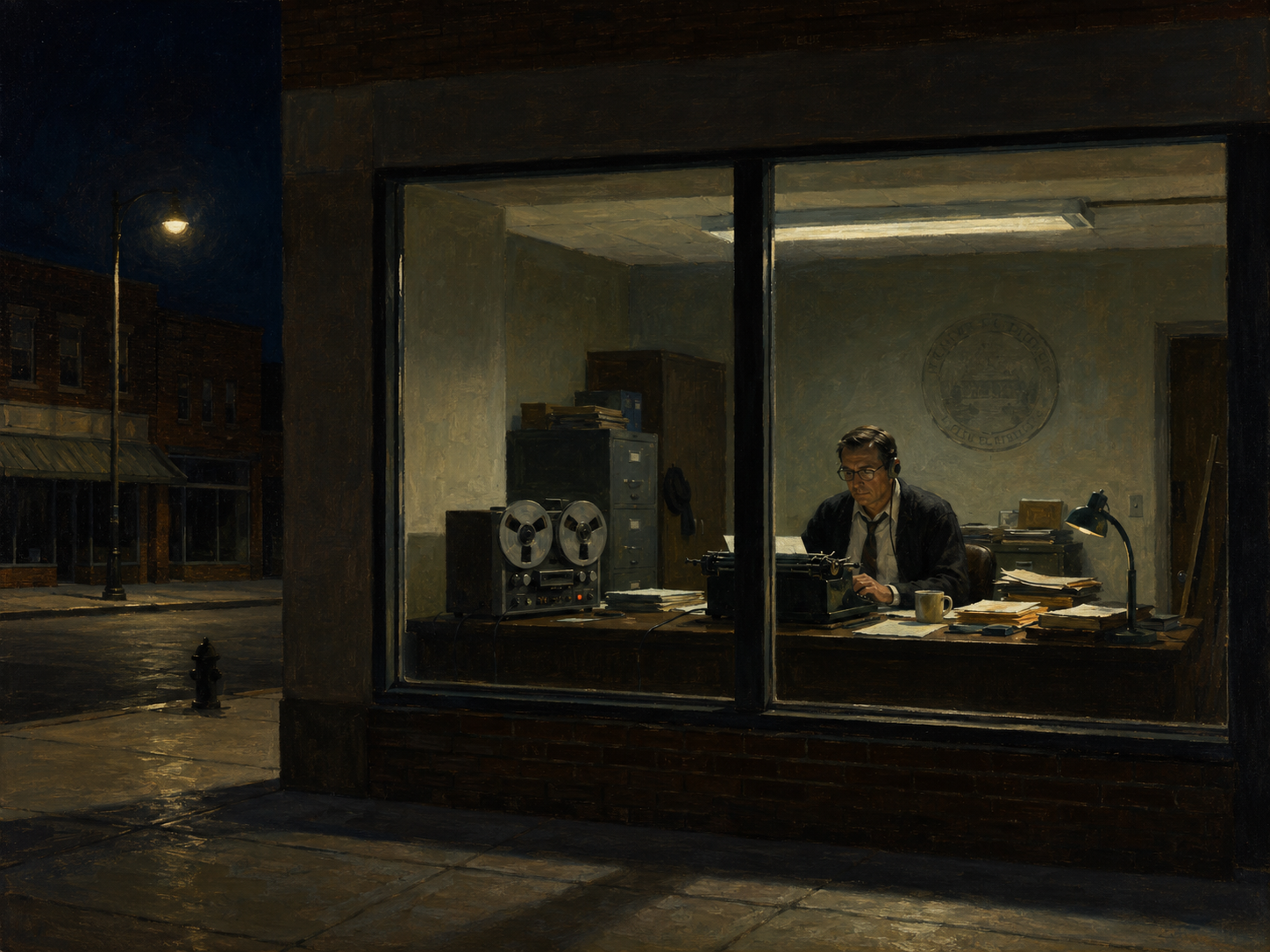
The Record Preserves the Vote. Not Always the Argument.
At your 12,000-person village, or your 50,000-person township, you cannot just go YouTube the council meeting from 1971.
Maybe it was recorded.
Probably not.
Maybe there was a tape somewhere, capturing the final budget passage at the end of the season. A little ceremony. A little pomp and circumstance. A formal vote after the real arguments had already happened somewhere else.
And maybe that tape was recorded over once the courtroom scribe by day, moonlighting as a municipal transcriber at 7:00 p.m. on a Tuesday, finished typing up the minutes and headed back to circuit court in the morning.
Tape was reusable. Storage was not infinite. And nobody thought the atmosphere in the room was the record worth preserving.
So we may know what the council did.
But we may not know what was said.
We may not know the argument made when the obligation to the pension fund was deferred for the sixth year in a row.
What were the cases for and against?
Maybe someone said: look at the economy. Look at the growth. People want to move here. Look at what we are building. There will be plenty of money in the future.
So why bind ourselves now?
Why not keep taxes lower today?
Why not fund the visible thing, the urgent thing, the thing people can see?
Future prosperity can carry the obligation. Future taxpayers will have the larger tax base. Future budgets will have more room. The obligation will be paid — just later, and with interest.
Maybe that sounded reasonable.
Maybe it even sounded responsible.
That is the problem with civic memory. The record often preserves the decision, but not the atmosphere around the decision.
Not the confidence.
Not the assumptions.
Not the voices saying this is manageable.
Not the quiet dissent from the person who thought the numbers did not add up.
And decades later, when the bill finally comes due, we are left asking not only what happened, but how it once made sense.