The Ground Remembers: Hugh Mercer, Princeton, and the Civic Work of Memory
Memorial Day is easy to flatten.
A long weekend.
A flag photo.
A grateful sentence.
A vague nod toward sacrifice.
None of those things are wrong.
But they are not enough.
Because memory is not the same as sentiment. Memory asks more of us. It asks us to name people, remember places, and understand that the freedoms we inherit were not produced by abstractions. They were carried by bodies. They were defended on roads, farms, rivers, fields, bridges, and frozen ground.
That is why I keep coming back to Hugh Mercer.
Not because he is the most famous man of the American Revolution.
He is not.
Not because schoolchildren memorize his speeches.
They do not.
Not because he left behind a theory of government that still fills college syllabi.
He did not.
I think I come back to him because he makes the American founding feel physical.
Mercer was born in Scotland. He trained as a physician. He fought as a Jacobite, fled after Culloden, the 1746 defeat that crushed the Jacobite attempt to restore the Stuart line, came to America, practiced medicine, served in the French and Indian War, and eventually became a brigadier general in the Continental Army.
That is the first thing worth noticing.
The Revolution was not only made by philosophers and pamphleteers.
It was also made by men who had already lived hard lives. Men who had crossed oceans. Men who had known defeat. Men who had buried causes before. Men who understood that history was not a seminar question.
It was a wager.
By January 1777, the American cause was not inevitable. It was fragile. Washington’s army had suffered badly. Enlistments were expiring. The grand language of independence had to survive mud, hunger, exhaustion, fear, and winter.
Then came Trenton.
Then came Princeton.
And at Princeton, Hugh Mercer fell.
On January 3, 1777, during the Battle of Princeton, Mercer was badly wounded after his horse was shot from under him. Encyclopedia Virginia records that he suffered severe bayonet wounds while serving under Washington and died nine days later.
There are different versions of the details, as there often are with battlefield memory. But the outline is clear enough.
Mercer was there.
He was leading men.
He was struck down.
He did not survive.
The famous Mercer Oak once stood near the place where he fell. The New Jersey Department of Environmental Protection notes that the tree stood in the middle of Princeton Battlefield, not far from the spot where Mercer was wounded. The original tree finally came down in a March 2000 windstorm, and that May, a sapling grown from one of its acorns was planted in the old stump.
That image matters.
A man.
A battlefield.
An oak tree.
A county that would later carry his name.
Mercer County’s own history page says the county was named in honor of General Hugh Mercer, “a distinguished hero of the Revolution,” who died from wounds inflicted at Princeton.
This is how civic memory works when it is healthy.
A place receives a name.
The name points to a person.
The person points to a sacrifice.
The sacrifice points beyond itself.
And over time, if we are not careful, the chain breaks.
The name remains, but the person disappears.
The person disappears, and the sacrifice becomes decorative.
The sacrifice becomes decorative, and the place forgets what it is standing on.
That is the danger.
Not hatred of country.
Forgetfulness.
A society does not have to reject its inheritance to lose it. It only has to stop attending to it.
We drive through Mercer County. We pass signs. We cross roads. We see names on maps, schools, parks, plaques, and public buildings. But many of those names have become civic wallpaper.
They are present but silent.
That is part of why local history matters.
Local history re-enchants the ordinary.
It tells you that the road is not just a road. The county is not just an administrative unit. The battlefield is not just open space. The public building is not just a place where forms are filed and meetings are held.
These things are containers of memory.
And memory is one of the materials out of which a people is built.
This is especially important as America approaches the 250th anniversary of July 4th.
The temptation will be to speak in very large words.
Democracy.
Freedom.
Liberty.
The American experiment.
The founding ideals.
Those words matter.
But they become thin when they are detached from ground.
The better question is:
Where did those ideals become costly?
In New Jersey, one answer is Princeton.
Not only Princeton as a university town. Not only Princeton as an idea. Princeton as a field where men fought in winter, where Washington’s army clawed back momentum, and where Hugh Mercer gave his life.
That is the kind of memory Memorial Day requires.
Specific memory.
Not generic gratitude.
Generic gratitude is easy. Specific gratitude is harder, because it forces us to learn names. It forces us to attach freedom to persons. It forces us to admit that our inheritance did not arrive cleanly, cheaply, or automatically.
There is a civic discipline in that.
A person who knows the names beneath his feet lives differently.
He is less likely to treat his town as disposable.
Less likely to treat his country as an abstraction.
Less likely to confuse criticism with contempt, or patriotism with performance.
Real patriotism is not loud all the time.
Sometimes it is the quiet work of remembering accurately.
Sometimes it is stopping at the battlefield.
Sometimes it is reading the plaque.
Sometimes it is teaching your children why the county has that name.
Sometimes it is refusing to let public memory become merely ornamental.
Hugh Mercer is not one of the founders we usually argue about.
He is not Jefferson, with all the brilliance and contradiction.
He is not Hamilton, building the machinery of public finance.
He is not Franklin, with the civic genius of Philadelphia.
He is not Washington, the indispensable man.
Mercer’s greatness is different.
He represents the men who made the founding real by giving it their bodies.
That kind of greatness is easier to overlook because it does not always leave behind quotable lines.
But a republic is not sustained by quotations alone.
It is sustained by sacrifice, memory, duty, and the local institutions that carry those things forward after the witnesses are gone.
This is why Memorial Day should not be allowed to dissolve into national mood music.
It should bring us back to ground.
To cemeteries.
To battlefields.
To roads.
To county names.
To old trees.
To public places that still hold the outline of what happened there.
The ground remembers.
But only if we do.
That is the work.
And it is civic work.
On this Memorial Day weekend, with the 250th anniversary of American independence approaching, Hugh Mercer is worth remembering not because he is obscure, but because he is concrete.
He reminds us that America was not born in abstraction.
It was born in particular places, through particular people, at particular costs.
Some of those places are very close to home.
Some of those names are still on the map.
And some of those men are still waiting to be remembered.
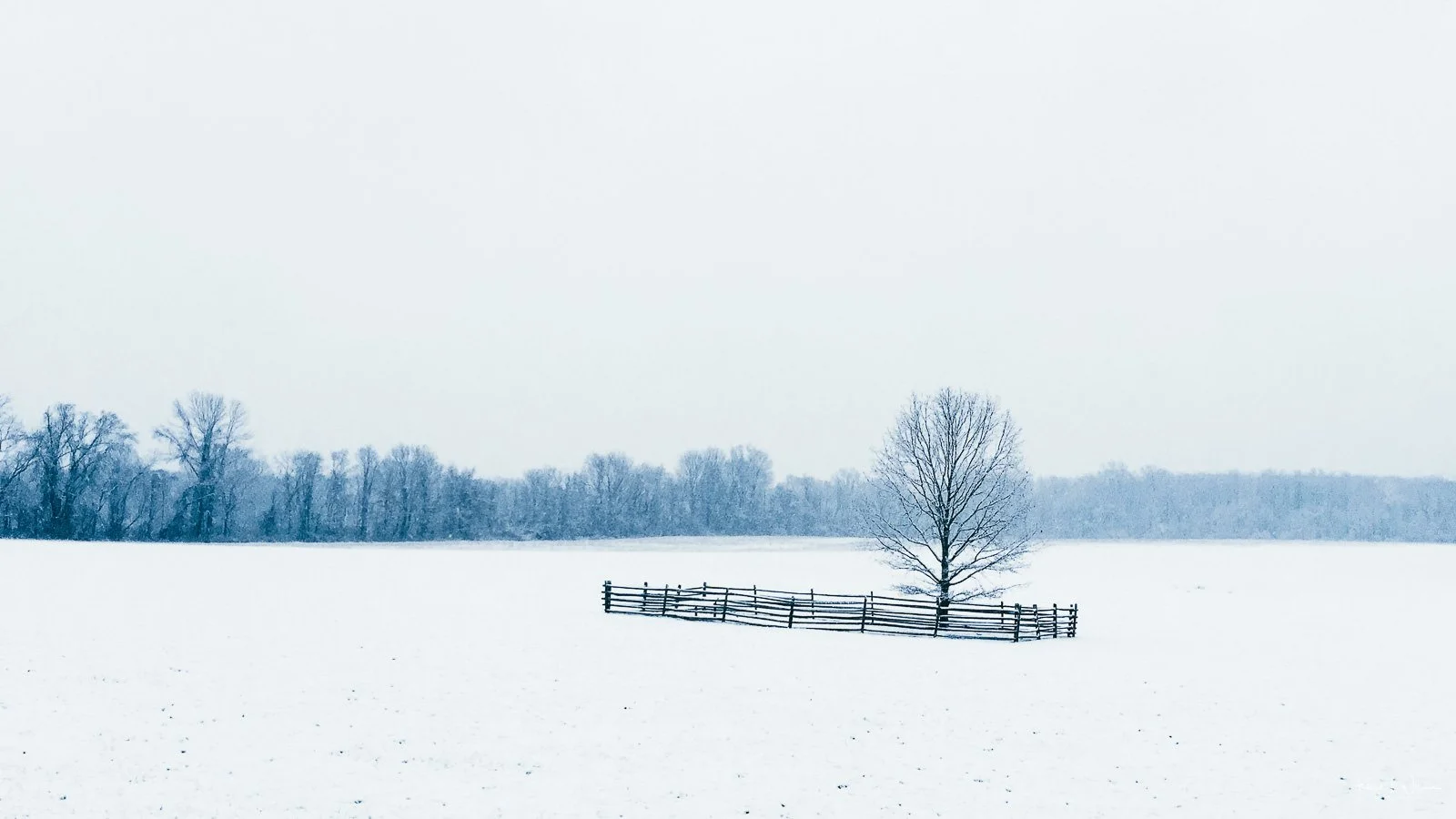
Photo: “Princeton Battlefield State Park, Princeton” (2016) by Khürt Williams, Island in the Net.
CC BY-NC-SA 4.0
